ASFB’s students in the spotlight for International Day of Women and Girls in Science
This International Day of Women and Girls in Science, we get inspired by four of ASFB’s awesome student members.
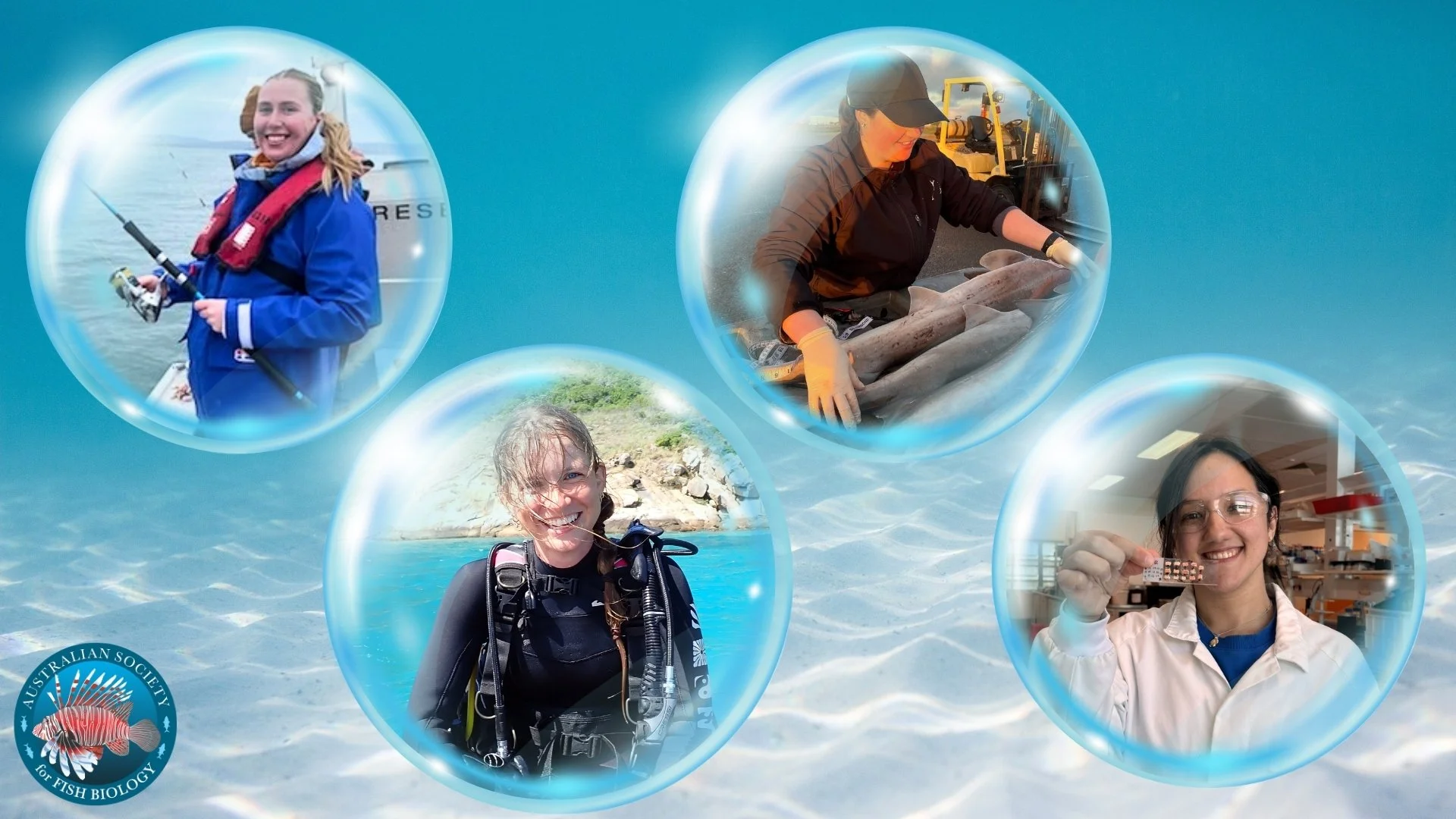
The International Day of Women and Girls in Science celebrates the remarkable contributions of women in science and raises awareness that science and gender equality must advance hand-in-hand to address the world’s major challenges.
This year, the Australian Society for Fish Biology is showcasing four of its talented student members. We learn what motivates them about their research, why they embarked on a career in science in the first place, and how their PhD experiences so far have shaped the advice they would give other women and girls thinking about following a similar path.
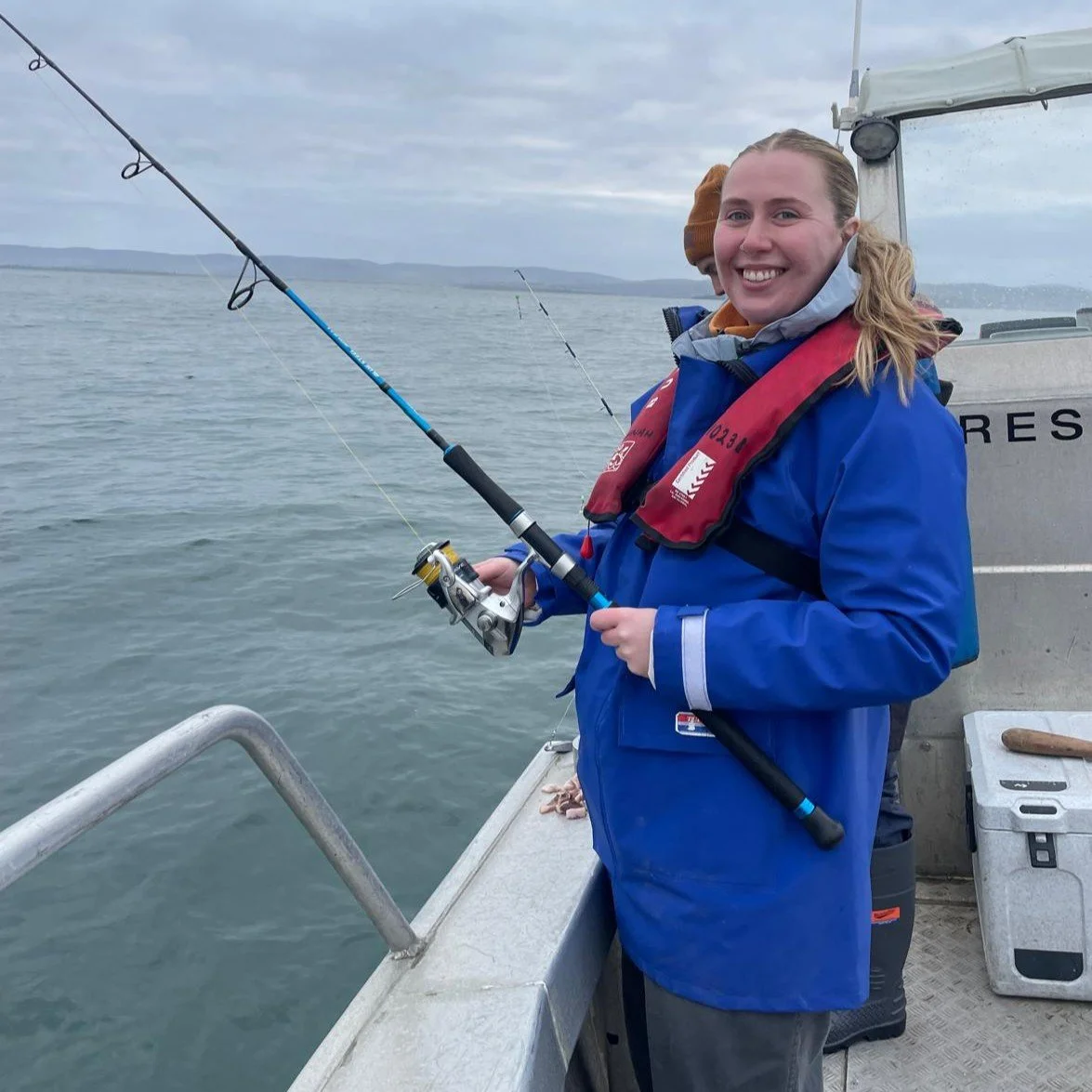
Rachel Breslin
University of Tasmania
Tell us about your research, and what it means to you.
I'm investigating how fishing pressure and ocean warming affect Southern Sand Flathead populations in Tasmania through genetics, physiology, and epigenetics. My research examines whether size differences across Tasmania result from fishing-induced evolution, where selective harvesting alters genetic makeup, or environmental stressors like marine heatwaves and warming oceans.
Spoiler: it's likely both (gasp) and understanding how these pressures interact is crucial for conservation.
Sand flathead are beloved by Tasmanian recreational fishers but are now classified as "Depleted." By uncovering these mechanisms, this research could directly inform sustainable fisheries management and help rebuild stocks that communities depend on for future generations.
What inspired you to pursue a career in science?
Growing up along Ireland's coast, the sea was always part of my world. I'm also nosey and love understanding the "whys" behind everything. I've long been fascinated by how organisms adapt, or fail to adapt, to environmental change and human pressures. Moving to Tasmania immersed me in a unique marine environment facing real conservation challenges. Witnessing firsthand how climate change and fishing combine to threaten species sparked my drive to understand the mechanisms behind it. Science gives me the tools to tackle these complex questions and contribute real solutions. Marine science lets me turn all that curiosity into a career.
With your PhD underway, what advice would you give your younger self and anyone else considering making the leap?
Choose a research question you're genuinely passionate about. You'll spend years with it, so it needs to sustain your curiosity through inevitable challenges. Don't underestimate the importance of a supportive supervisor and research community, they're essential for weathering those moments.
Stay open to unexpected opportunities, whether unfamiliar techniques or interdisciplinary detours. Some of the most rewarding experiences will come from the unplanned. Your PhD won't unfold as expected, so stay adaptable. Remember that science is iterative: setbacks aren't failures but opportunities to refine your approach and grow. Stay kind, stay open, be patient with yourself, and celebrate small victories.
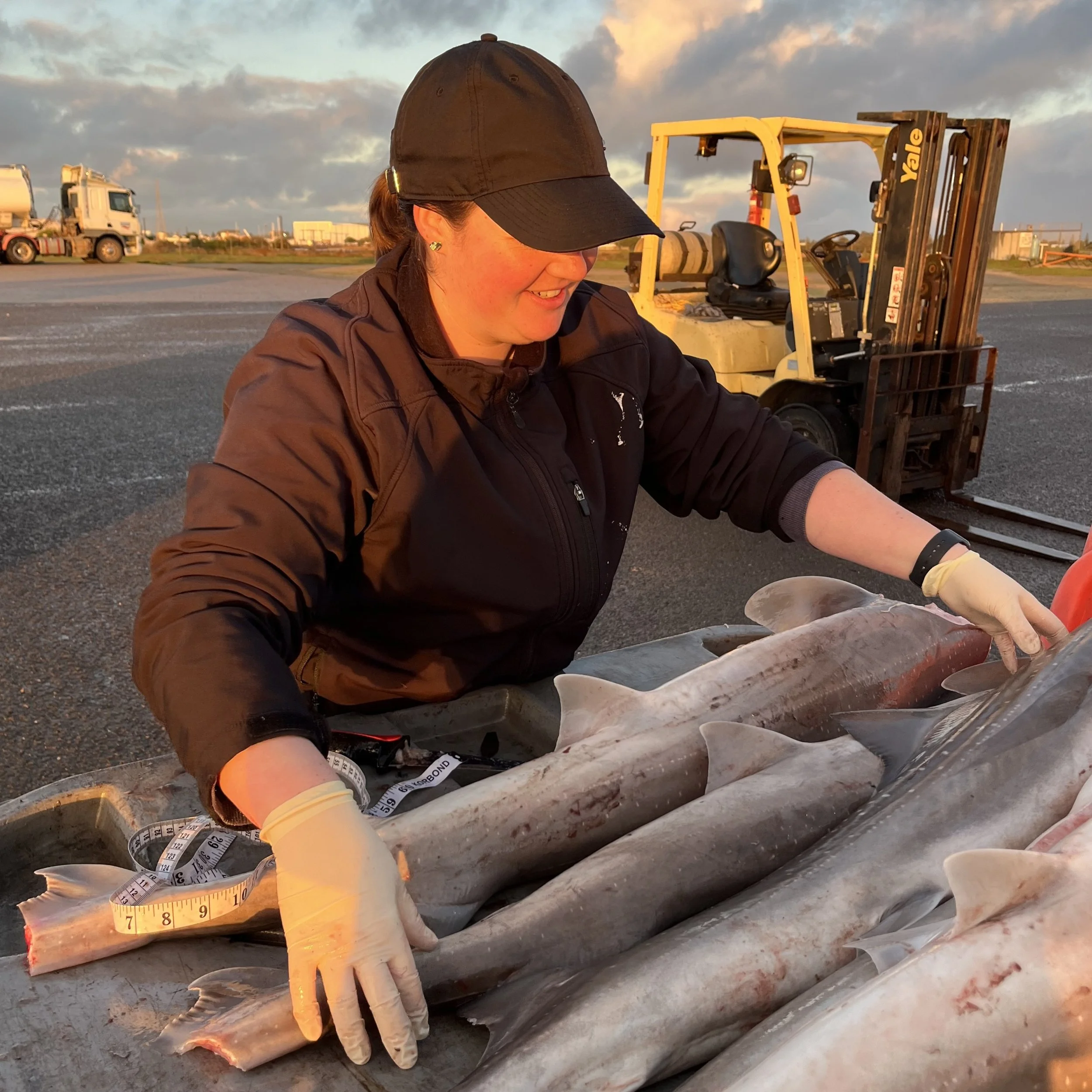
Madison Baker
Adelaide University
Tell us about your research, and what it means to you.
My research involves using the vertebrae of sharks to reconstruct their reproductive histories. Like a black box, their vertebrae record not only age, growth and ecology, but reproductive biology too.
I am attempting to harness the hormones preserved within these rings of time, often from specimens that would otherwise go unused, sourced from fish markets and museum archives, to address key questions related to shark reproductive life histories. Questions that were previously impossible to answer using living or single-time-point samples like blood or muscle tissue.
Revealing the hidden chapters in sharks’ lives will support stronger management and conservation frameworks.
What inspired you to pursue a career in science?
A deep passion and unending fascination for the natural world, particularly the marine environment, inspired my career in science. Childhood experiences such as snorkelling on the Great Barrier Reef, beachcombing, exploring tidal pools, and whale watching all sparked that curiosity.
Influential figures like Steve Irwin, Valerie Taylor, Sir David Attenborough, and Steve Backshall brought the underwater world into my home, sharing not only the weird and wonderful but also their passion, excitement, and concern for its future. These experiences instilled a desire to leave the world a little better than the way I found it by tackling environmental challenges.
With your PhD underway, what advice would you give your younger self and anyone else considering making the leap?
Make sure you choose something you’re passionate about. A PhD is long-term and can be quite challenging at times. That passion grounds you and motivates you when times get hard. Try not to lose sight of that.
Accept that setbacks and failures are a part of the process of discovery. They will happen and you’ll have to be resilient and transform a negative experience into positive learning.
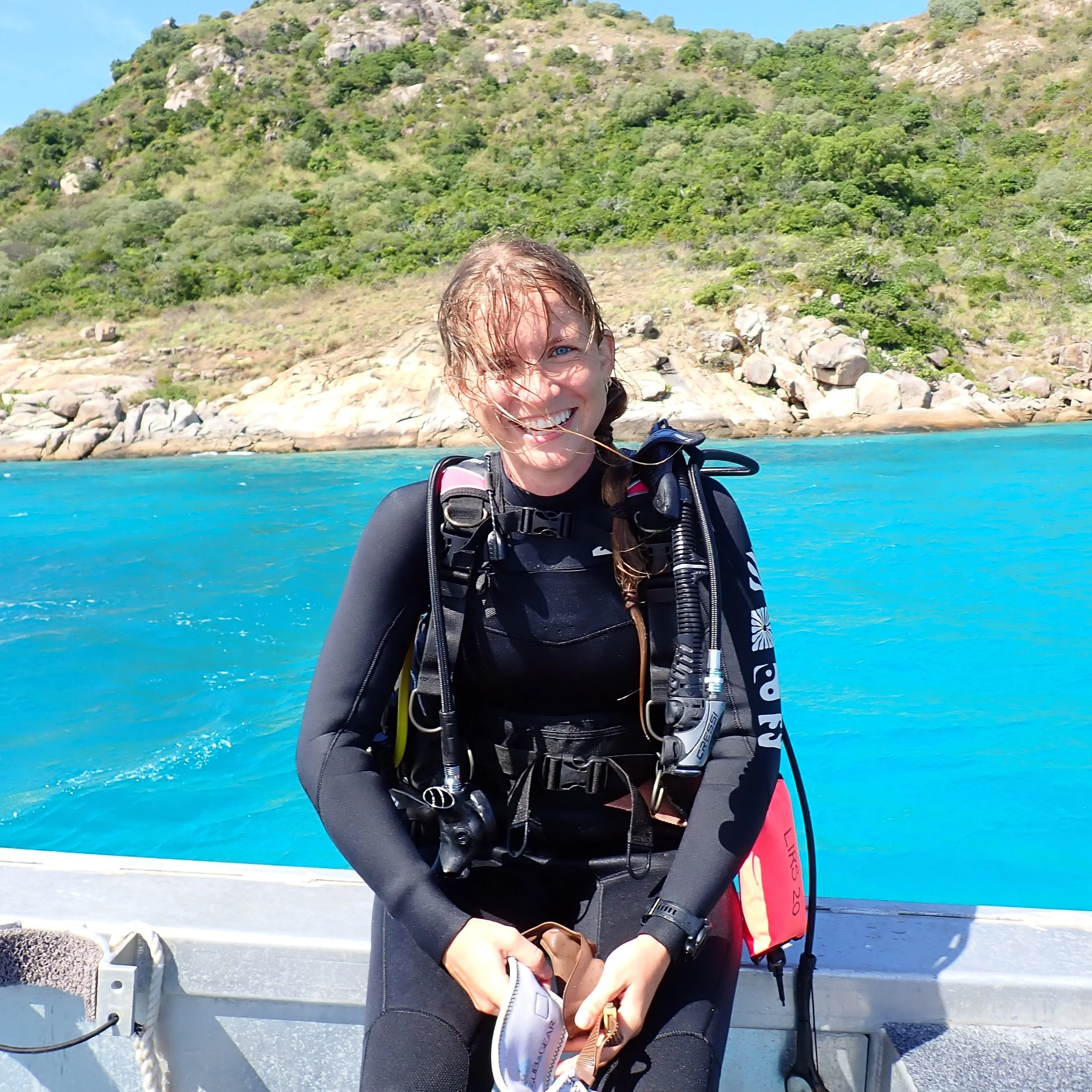
Zoe Storm
James Cook University
Tell us about your research, and what it means to you.
My PhD, Navigating Change: Understanding Coral Trout Vulnerability to Fishing Through Behaviour, Physiology, and Environment, examines how fish behaviour and physiology shape vulnerability to capture, and how these processes may shift under climate change. By linking individual-level traits to population-level outcomes, I aim to better understand how fishing and environmental change interact.
I am passionate about fish and strongly believe in cross-disciplinary research, as ecological challenges are never purely biological. Collaborating internationally across fish ecology, physiology, and behaviour, I feel incredibly privileged to contribute to research at a time when understanding and protecting our oceans has never been more urgent.
What inspired you to pursue a career in science?
I have wanted to be a marine biologist since I was about ten, when summer holidays were the highlight of my year as I spent long days discovering critters in rock pools or exploring underwater with my mask on.
The ocean fascinated me because, although it surrounds much of our planet, most of it remains hidden, a world full of mystery and discovery. That sense of wonder hooked me early and never let go. Biology allows me to explore these mysteries, understand organisms and their connections, ask questions, and stay curious for a living.
With your PhD underway, what advice would you give your younger self and anyone else considering making the leap?
I chose to pursue a PhD because I wanted to grow as a researcher and contribute to knowledge in a meaningful way. To my younger self, I would say: follow your dreams, but remember it is okay if they evolve. Life rarely moves in a straight line, and there is beauty in the winding paths it takes. Pause to appreciate where you are and trust the path you are on.
Curiosity, perseverance, and above all, kindness, to yourself and others, will carry you forward. Keep asking questions, stay curious, and never stop standing up for what you believe in.
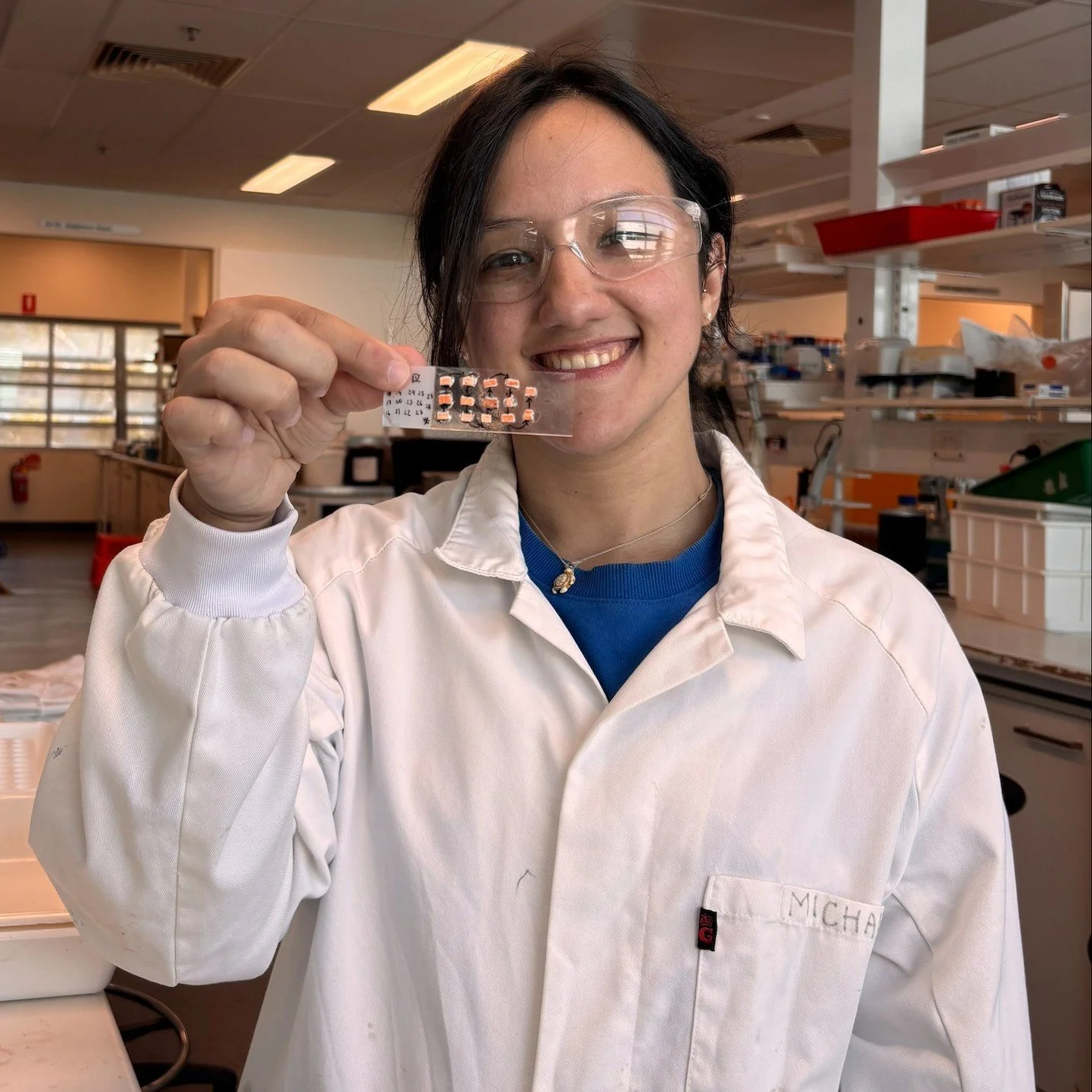
Arieli Tristão Rézio
University of South Australia
Tell us about your research, and what it means to you.
My research explores the use of chemical markers to track origins and movements of seafood. Part of my PhD looks at neodymium (Nd) isotopic ratios as a newer approach, but I also use other elemental markers to study connectivity among crab populations, for example.
My goal is to contribute to improving fisheries management and conservation, as well as combat provenance fraud and seafood mislabelling. Developing this project has given me the chance to move between fundamental science and real-world impact, collaborate with amazing researchers, and work on what I truly care about, using science to support fisheries management and conservation.
What inspired you to pursue a career in science?
When I was in high school, I needed to prepare a presentation about molluscs. As I was researching it, the more I read, the more I became fascinated about them, but especially for cephalopods. Growing up in the middle of Brazil, far from the ocean, this was my first real exposure to learning about marine biology.
Studying about these animals has ignited this fire, this sense of curiosity and wonder I had never felt before, and the deeper I delve into cephalopods, the more amazed I became by them. That’s when I realized I needed to pursue a career in marine science!
With your PhD underway, what advice would you give your younger self and anyone else considering making the leap?
I’d say be brave enough to take the leap and embrace the opportunity to follow your dreams, even if it means moving to a different country or city. Doing a PhD can feel overwhelming at times, so it’s important to stay curious, trust the process, remember why you started, and keep moving forward, even when challenges arise. Having a strong support network of friends, peers, and supportive supervisors has made the journey feel much lighter than it actually is.